Multi-Tenant Network Management for MSPs
Multi-tenant network management for MSPs comes down to one test. Each client needs its own separate space, and your engineers need to work across all of them from one place. Open-AudIT, NMIS, CyberCision and STM each pass that test for a different part of your managed service.
 Open-AudITDiscover every client network before you quote
 NMISMonitor each client network against its own baseline
 CyberCisionSell email, web and firewall security under your brand
 STMSee every flow on a client network as it happens
They are separate products, licensed separately. Add the one that closes your biggest service gap, then add another when a client asks for it.
Trusted by 150,000+ organisations, including these


What changes when your tools are built for many clients
Most MSP tool sets grew one purchase at a time. Here is what that looks like, and what changes when each tool is built for multi-client work.
With FirstWave
- Margin
- Each product you add is another managed service you can price and bill
- Onboarding
- Open-AudIT discovers the client network before you quote, and its paid editions feed what it finds into NMIS
- Proactive support
- NMIS learns each network's normal behaviour and flags anomalies, so you call the client first
- Renewals
- Renewals rest on per-client reports, service level data and traffic evidence
- Vendor count
- One vendor for discovery, monitoring, email, web and firewall security, and traffic control
Today
- Margin
- Commodity monitoring and break-fix work get squeezed on price
- Onboarding
- Engineers enter devices by hand and still miss some
- Proactive support
- The client spots the fault and raises the ticket
- Renewals
- Renewals rest on relationship and goodwill
- Vendor count
- A different vendor, console and skill set for every capability
Most rows need one or two products. Onboarding needs Open-AudIT and NMIS. Proactive support needs NMIS alone. Only the vendor count assumes you run all four.
Open-AudIT
Network Discovery, Audit & AI Compliance
Network discovery for MSPs with Open-AudIT
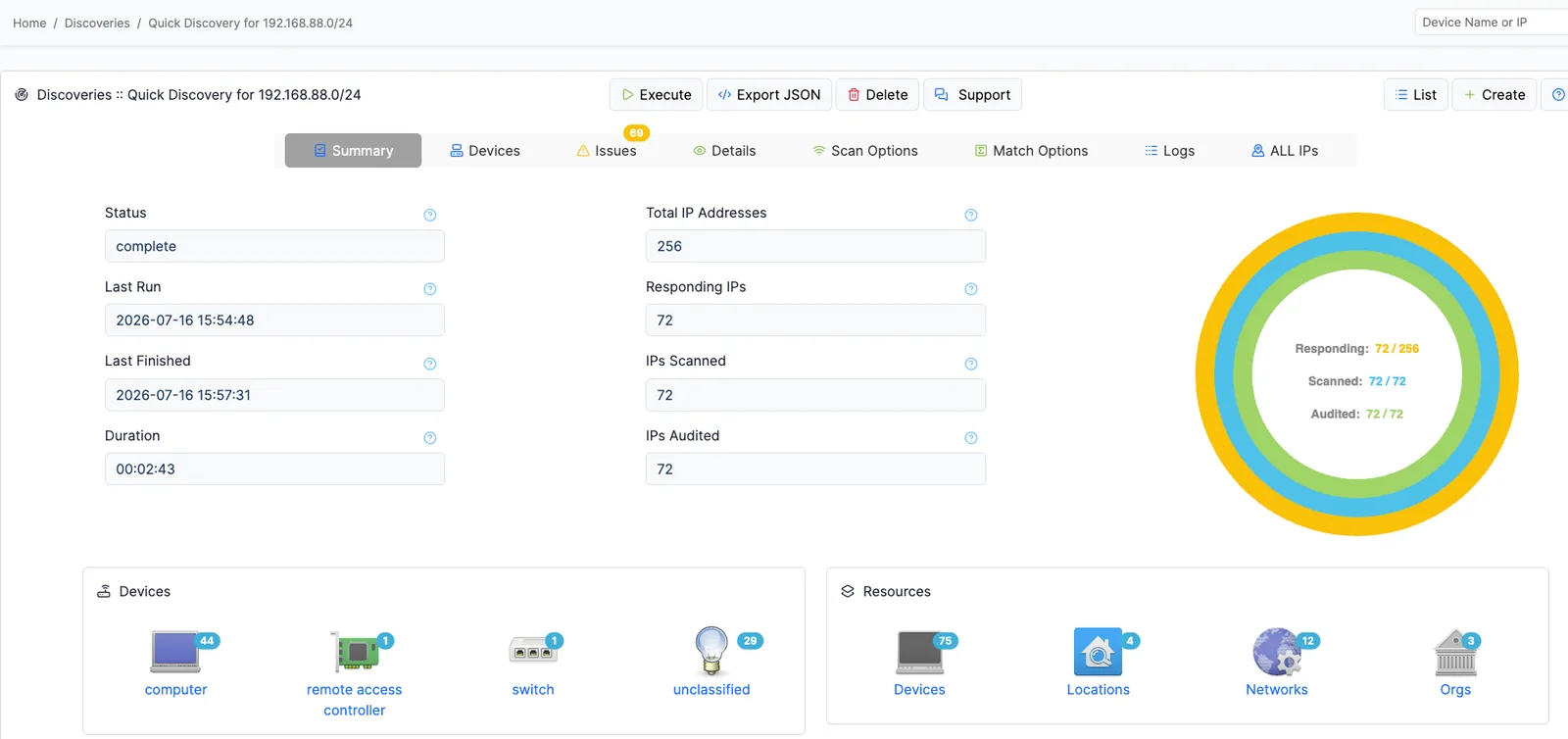
Open-AudIT finds every device on a client network without agents, using SNMP, SSH and WMI, and builds the hardware and software inventory from what it finds. For an MSP, the part that matters is how it keeps clients apart.
- Multi-tenant organisations
- Each client sits in its own organisation with separate discovery, inventory and reports. Role-based access means engineers see only the clients they are assigned to, and data does not cross between clients.
- Distributed site collectors
- Place a collector at each client site. It scans the local network and sends results back to your central Open-AudIT instance, including from remote and air-gapped sites.
- Automated per-client reporting
- Schedule inventory and change reports for each client and they run on their own. Reports can go out white-labelled, so clients see your name on them, not ours.
Onboarding is where this pays off first. Run a full discovery before you scope the engagement and you see every device, its installed software and its licence status. Surprises turn up before you price the contract, not after.
NMIS
Network Management & Monitoring
MSP network monitoring software with NMIS
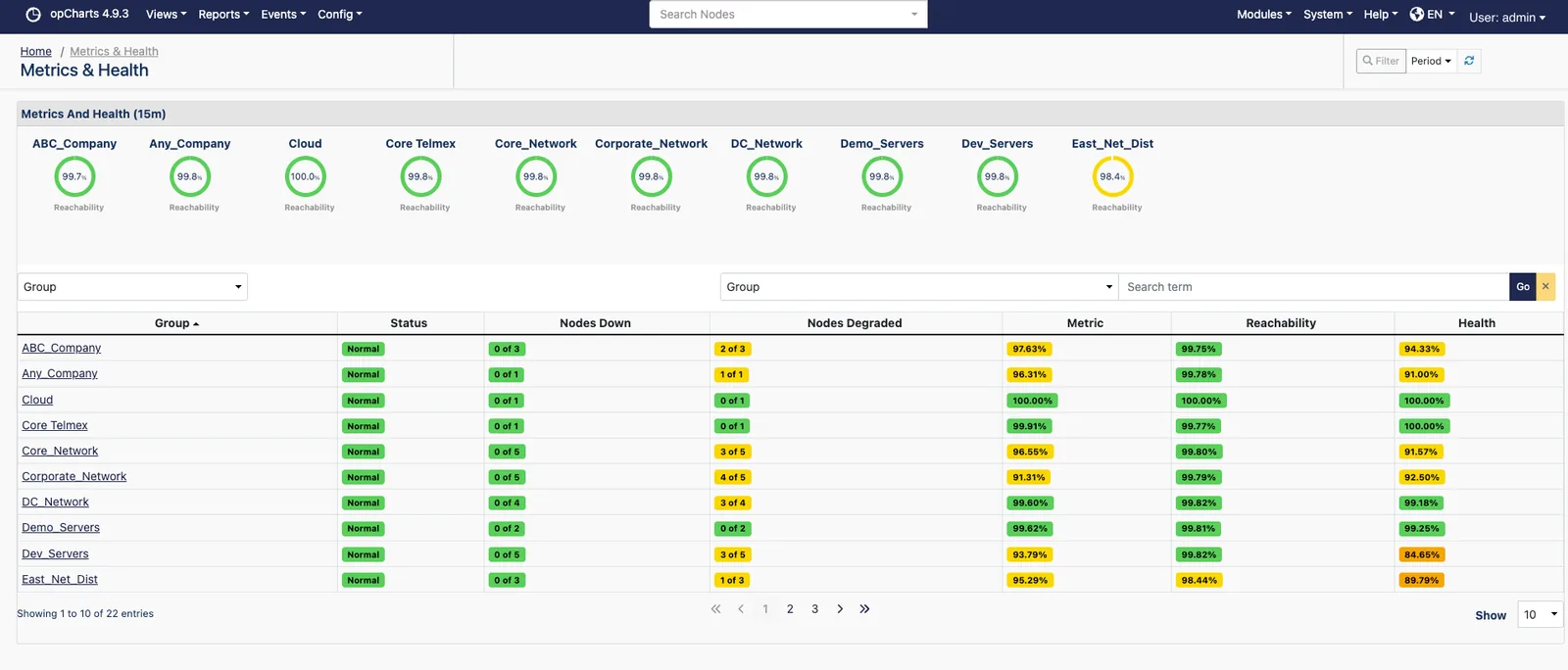
NMIS has monitored production networks since 1998. It gives each client network its own baseline, using AI baselining and anomaly detection, and runs across many clients through multi-tenancy and distributed polling. Three things matter most when you run it as a service.
- Onboarding without manual device entry
- Open-AudIT discovers the client network, and the integration routines in its paid editions feed those devices into NMIS for fault and performance monitoring. Nobody keys in device lists or imports spreadsheets.
- 10,000+ device types, and you model the rest
- NMIS supports more than 10,000 device types out of the box. When a new client brings something it has never seen, your engineers build the device model in-house. There is no vendor roadmap to wait on.
- No operating system or database licence to buy
- NMIS runs on 64-bit Linux, including Debian and Ubuntu, and stores its data in MongoDB. Run it on a free Linux distribution and there is no OS or database licence cost on each deployment.
Device modelling is the one MSPs feel most. BG Unified, an MSP running NMIS across several data centres, adds new devices this way "without waiting for vendor updates". That is the difference between taking on a new client's odd hardware and turning the work away.
NMIS extends with commercial opModules
CyberCision
Email, Web & Firewall Cybersecurity
White label security for MSPs with CyberCision
Security is the service clients ask for and most MSPs struggle to staff. CyberCision is cybersecurity-as-a-service covering email, web and firewall protection. It is cloud-delivered, so there is no hardware to install, and it was built for carriers and MSPs from the start.

- Multi-tenant by design
- One CyberCision service carries many clients as separate tenants, with provisioning per subscriber. Adding a client does not mean building another environment.
- White-labelled under your brand
- Sell email, web and firewall security as your own service. CyberCision also integrates with your OSS and BSS (operations and business support systems), so provisioning and billing fit the way you already work.
- Cisco Talos threat intelligence
- Filtering draws on Cisco Talos, Cisco's threat intelligence research organisation. Email filtering blocks malware, ransomware, phishing and impersonation before the inbox, with real-time URL and attachment scanning.
Start with email security for one client segment, then add web and firewall services as the practice grows.
See it with your own client mix
Book a demo and we will walk through discovery, multi-tenant monitoring and white-labelled security against the kinds of clients you actually run.
STM
Network Traffic Visibility & Control
Traffic visibility for every client network with STM
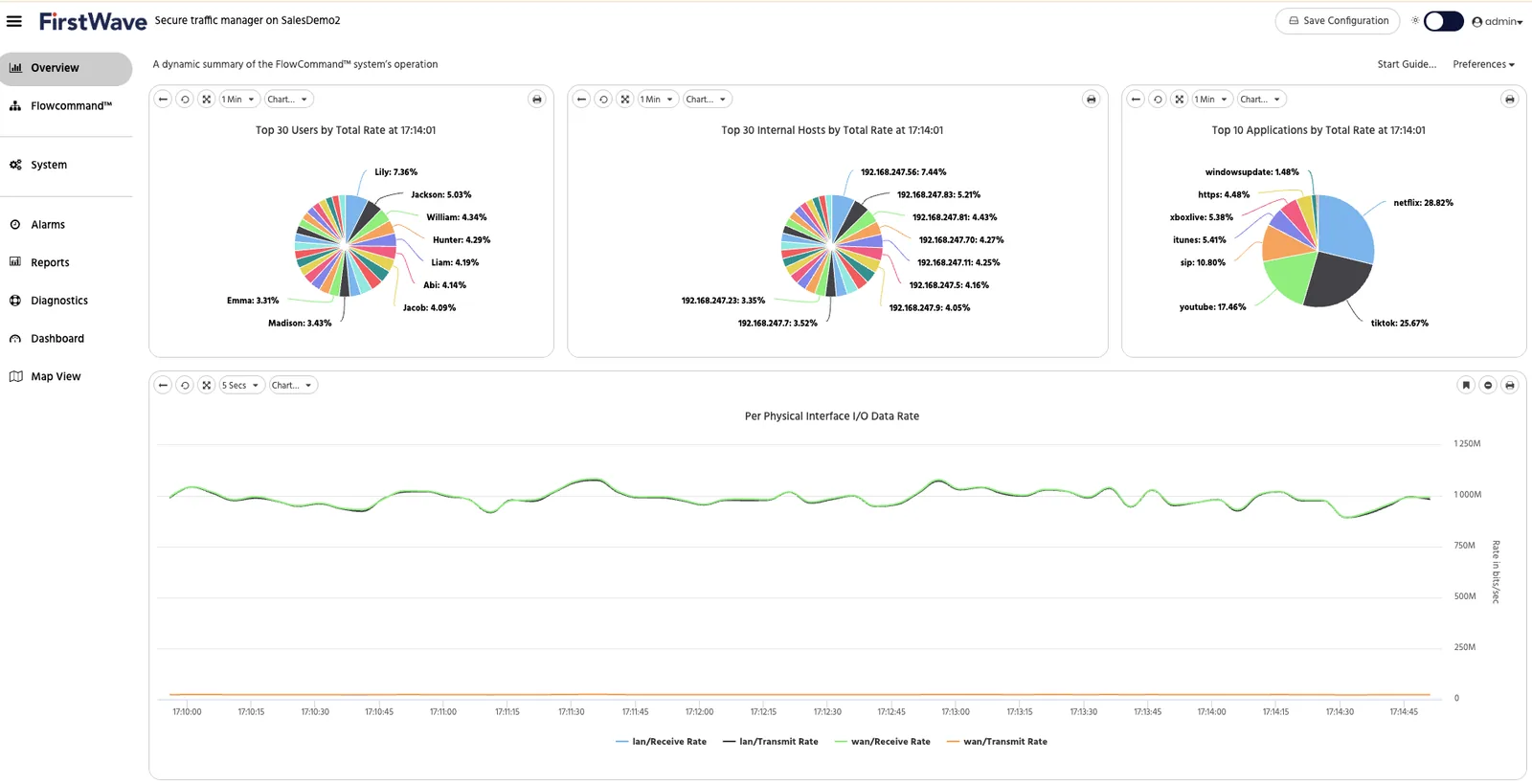
"The network is slow" is the ticket nobody can close quickly, because nobody can see where the traffic goes. STM, Secure Traffic Manager, shows every flow on a client network as it happens, and gives you the controls to fix it.
- Real time, with no sampling
- STM watches all traffic live instead of sampling it. Short spikes and small flows do not vanish between samples, so what you see is what happened.
- Control per bit, user, device and segment
- See and control traffic at each of those four levels. Show a client whether the slowdown is one heavy user, one application or a saturated network segment.
- Application quality of experience
- Application-level Quality of Experience (QoE) analytics show how each application performs. Traffic shaping and prioritisation make sure the applications a client depends on get bandwidth first.
Linxus Internet runs STM with an integration into its Sonar billing system, so traffic enforcement stays in step with what each subscriber pays for.
Deployment options from air-gapped sites to SaaS
Client environments vary. One will not allow an internet connection. The next runs everything in the cloud. Each product deploys the way its job needs.
- Open-AudIT
- Uses collectors and optional agents for remote and air-gapped environments, and runs on Windows or Linux.
- NMIS
- Installs from source, as a virtual appliance (OVA) or in Docker, on 64-bit Linux.
- STM
- Runs on commodity hardware or in virtualised environments. Check the STM hardware requirements.
- CyberCision
- Delivered as SaaS, with nothing for you to host.
That range lets you bid for a defence or government client with a locked-down network without changing vendors or retraining your team.
“Our complex needs in catering to businesses in the defence and government sector made NMIS and FirstWave the clear choice to empower our NOC”
Frequently asked questions
Anything else about running these products as a service, ask our sales team.
- Do I need to buy everything at once?
- No. Open-AudIT, NMIS, CyberCision and STM are separate products, each licensed on its own. Start with the one that fills your biggest service gap. A discovery-led MSP might begin with Open-AudIT, a security-led one with CyberCision, and add products as clients ask for them.
- How does multi-tenancy work across the products?
- Open-AudIT puts each client in its own organisation, with role-based access controlling which engineers see which clients. NMIS separates clients through multi-tenancy, distributed polling and role-based access, and opHA adds tenant isolation across servers. CyberCision is multi-tenant by design, with each client as its own tenant.
- Do I need to install an agent at every client site?
- No. Open-AudIT discovers devices over SNMP, SSH and WMI without agents. Collectors handle scanning at each site, and agents are optional for Windows and Linux machines where you want deeper data. NMIS polls devices over the network, so there is nothing to install on them either.
- What happens when a client has devices NMIS doesn't recognise?
- Your engineers model them. The extensible model architecture in NMIS lets you add new device types in-house, on top of the 10,000+ supported out of the box. You can commit to managing whatever a new client runs.
- Can I white-label these services?
- CyberCision is built to be sold as a white-label security service under your brand. Open-AudIT supports white-label reporting, so client reports carry your name. For branding on other products, talk to our sales team about your deployment.
- How does pricing work for MSPs?
- Open-AudIT paid plans are priced per device, so your cost follows the devices you manage. NMIS, the opModules and multi-tenant MSP deployments are priced as custom bundles through our sales team. See the pricing page or talk to sales.
Certified & Accredited


See how it fits your client base
Book 30 minutes with our team to walk through the products that match your service gaps, with your own client environments in mind.