The Importance of Network Visibility in Response to the Internet of Things
The Rise of IoT
The Internet of Things (IoT) has led to many businesses capitalizing on the computational potential and the increase in data available in everyday objects. The breadth of devices with internet connectivity has been increasing exponentially. CEB (CEBglobal -- IoT Security Primer) suggests that the number of connections will grow from 6 million in 2015 to 27 billion by 2025. This increase has led to many new products and many new vendors operating in a market that can be vulnerable to catastrophic attacks. They continue by saying almost 40% of businesses believe that poor visibility and understanding is their leading risk management challenge.
Why Visibility Matters
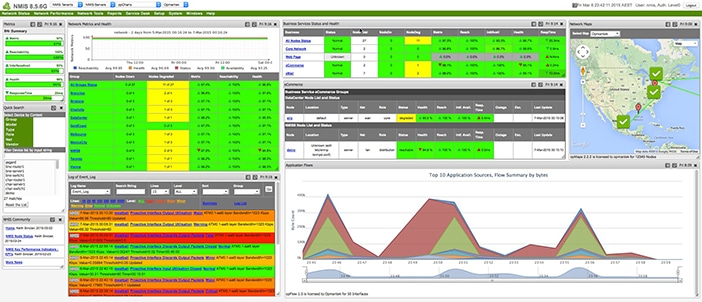
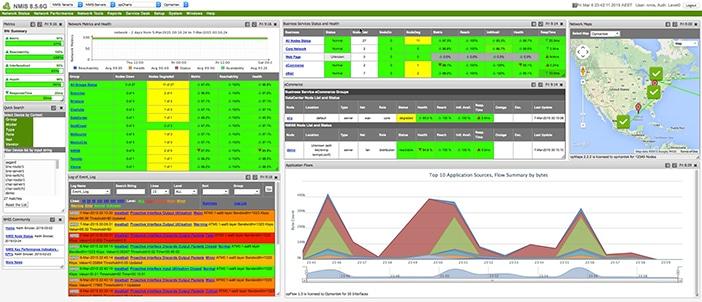
The underlying problem with a network that is considered to have poor visibility is the limited ability to discover everything that is connected to it. NMIS can manage any device that has an IP address, so if it is connected to your network, directly or indirectly, NMIS will know.
Device Modelling and Vendor Support
With the evolution of devices, there should be equal to greater sophistication in the understanding practices that are used to monitor devices. NMIS collects information from any device on your network and by using the "sysObjectId" variable, it can attribute a vendor to the device from the Enterprise list. The list of vendors is continually expanding, and you can peruse the most common list on the NMIS vendor and device support page. However, the true functionality of NMIS is the ability to control new vendors. This process is better explained in the NMIS device model development documentation.
Custom Thresholding and Control
The increased visibility combined with custom thresholding using NMIS means there will be greater control over your network. Users of NMIS will be familiar with SNMP and device modelling, but there are more custom controls available. Keith Sinclair (Opmantek CTO) presented a webinar that walks through the use of MIBs for custom functions, device modelling, and custom thresholding.
Here at Opmantek, we are constantly looking for new ways to help your workday. If you have any feature requests, webinar topics, or ideas you would like to see get developed, don't hesitate to reach out.
Related reading:

Written by
Head of Marketing
Can't see the woods amongst the trees without Open-AudIT
Related datasheets
Take the details with you in a printable one-pager.