Mutual Benefits of Consultative Relationships Between MSP and Business
It is well known that any partnership that is built on mutual gain has more potential to last longer and progress further. How to define this relationship, however, can be difficult when dealing with constantly changing technology and differing client bases. The relationship between a managed service provider (MSP) and a business is one that can be prone to these difficulties, especially if the service level agreements (SLAs) are not defined precisely.
Proactive Monitoring Sets You Apart
The critical factor for a successful MSP is being able to predict and be proactive to problems rather than reactive. This is what will differentiate you from a break/fix method, but also increase your customer satisfaction. If an MSP can predict hardware malfunction or server thresholds, the advice that can be given is invaluable in the MSP/business relationship. The fundamental principle behind this is increasing the user experience inside the business.
Shifting Focus to User Experience
The end goal, to increase user experience, should be the focus for MSPs; this is a crucial factor for a successful business. With a happy user experience, there is an increase in staff productivity which can help the business grow. Changing the MSP's goal of keeping the equipment in an ideal state to increasing or maintaining user experience can help solidify business relationships.
Building a Consultative Relationship
The higher the communication and visibility that a user has, the more it can help facilitate the belief they are in an actual consultative working relationship; currently, 48% of businesses working with an MSP would prefer a higher level of consultative relationship. This will increase the business's perceived value for money with the SLA because you are working intimately with the MSP regardless of the situation. Further, the level of service is increased because the MSP has a better understanding of why client requirements are present. When those two factors are taken into consideration, the business has a higher return on investment, and the MSP is doing a better job -- this is mutually beneficial.
Adjusting Monitoring and Reporting
The change in mentality from equipment state to customer satisfaction requires the MSP to adjust their monitoring and reporting. The adjustments may include things such as third-party SaaS monitoring, software licensing management, and even topographical readings. A customer is happier when their internet or service is down if they know why -- for example, poor weather. Further, the ability to predict trouble can facilitate better relationships; through hardware monitoring an MSP can predict when hardware may need replacing.
Presenting Meaningful Data with opTrend
Presenting meaningful data to businesses through meetings can increase the level of control and transparency that a client has over their system while simultaneously growing the business relationship. To gain the data, an MSP can use opTrend, which provides cutting-edge predictive analytics. The AI-driven application identifies resources that are showing abnormal activity based on historical behaviour and provides an organisation with correct trend analysis of critical resources. This assists in the early detection of potential failures and resource exhaustion.
An application that builds its own baselines will be more accurate than any model that is provided by a vendor. Using six months of data, a baseline is constructed that is a custom representation of the device while taking into account the time of day and also the day of the week. This builds an accurate snapshot of what your system should be doing at a given time and assists in identifying outliers that are not considered normal.
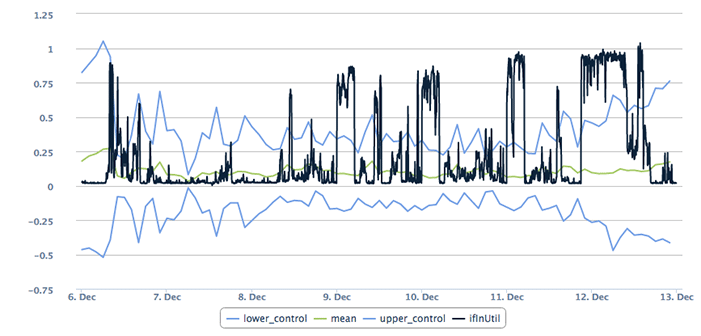
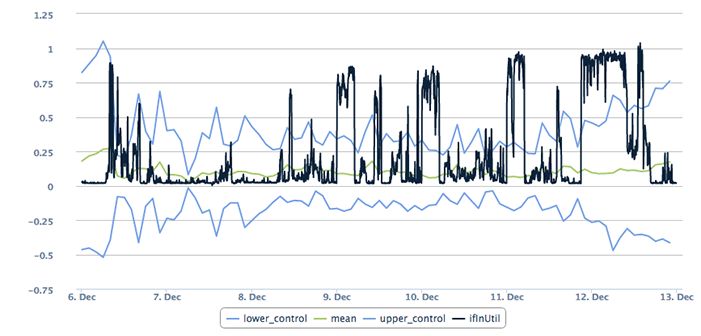
The graph above demonstrates the power of the application; the blue lines are the expected ranges, the green is the overall mean, and the black is the recorded value. The graph indicates that on December 6th the system was in heavy use, but it was expected and not considered an outlier -- this may be due to a system back-up, for instance. However, from December 9--13 there was a significant increase that is not regarded as normal. Using this information, although no major fault may have occurred, an MSP could extrapolate potential vulnerabilities in the future.
Related reading: Benefits of Developing a Strategic NOC Service

Written by
Head of Marketing
Can't see the woods amongst the trees without Open-AudIT